Elden Ring Nightreign Co-op Guide — 3-Player Strategies & Teamwork Tips
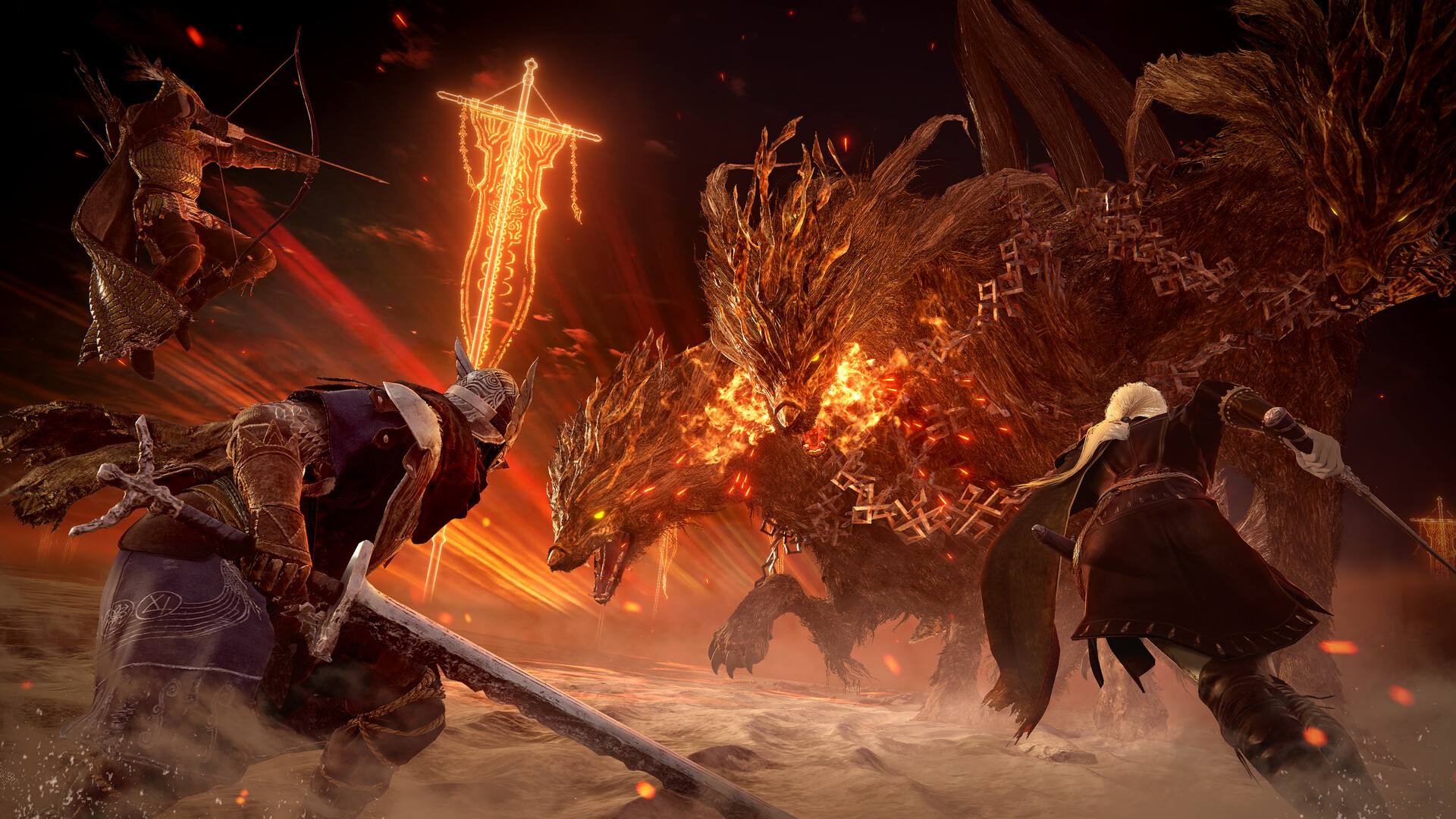
3-Player Team Roles
| Role | Primary Focus | Night Boss Responsibility | Day Phase Activity |
|---|---|---|---|
| Tank / Aggressor | Absorb boss attacks; maintain aggro | Face boss; trigger stagger; draw attacks from teammates | Clear camps quickly; open paths for team |
| Burst Damage | Maximum DPS in safe windows | Attack boss flanks/rear; fire ultimate on staggers | Target field bosses; rune arch collection |
| Support / Revive | Keep team alive; revive fallen members | Manage revives; heal tank when possible; contribute DPS when safe | Church collection; flask restock; secondary rune arches |
The Power of Three — Why Full Trio Outperforms Duo
Elden Ring: Nightreign's balance explicitly favors three-player teams over two-player or solo configurations. Night Boss health pools and damage output are calibrated for trio teams; running duo or solo means facing the same HP and damage with reduced total team DPS and healing. A full trio completes Nightlord fights that a duo would likely fail at identical character power levels. The third player provides the margin of error that makes Night Boss mechanics forgiving enough to be enjoyable rather than punishing.
The practical advantage of three players is most apparent in revive mechanics. With three players, a single death still leaves two standing — one continues fighting while the other revives the fallen teammate. In a duo, one death leaves only one player to fight the Night Boss solo while also managing the revive interaction. In a trio, deaths are recoverable without stopping DPS; in a duo, every death is a significant challenge.
Even three players with similar Nightfarer archetypes outperform a duo with ideal composition. The raw numerical advantage of three health pools, three damage outputs, and three flask stocks overwhelms the theoretical efficiency gains of a perfectly optimized two-player setup. Always recruit a third player before starting an Expedition if at all possible.
Revive Mechanics — The Most Critical Co-op Skill
Reviving fallen teammates is the most critical mechanical skill in Nightreign co-op. When a Nightfarer is downed, they enter a downed state — lying on the ground, still able to trigger a slow crawl toward a teammate but unable to fight. A standing teammate can approach and hold the interact button to revive them over approximately 3 seconds. The reviving player is stationary and vulnerable during this time.
The revive timing decision is the most high-stakes choice in Night Boss fights. Reviving too aggressively (during the boss's attack animation) results in both the reviver and the fallen Nightfarer dying to the attack, turning one death into two. Waiting for the correct window — immediately after a boss attack chain ends, before the next chain begins — is the skill that distinguishes experienced co-op players from beginners. The boss always has a brief recovery or repositioning moment between major attack sequences; this is the revive window.
Support Nightfarers with passives that reduce revive time or increase revive range make this mechanic significantly more forgiving. A 30% faster revive passive on a support Nightfarer reduces the window of vulnerability during revival from 3 seconds to approximately 2 seconds, which makes a meaningful difference against boss attacks with 1.5–2 second windows between combos. Designating the support as the primary reviver (unless they are also downed) creates a clear team workflow that prevents hesitation during chaotic fights.
Night Boss Coordination Strategies
- Triangle formation: Position all three Nightfarers at 120-degree angles around the boss; the boss can only face one direction, exposing its flank and rear to two players at all times.
- Ultimate synchronization: Burst damage Nightfarer holds their ultimate until the tank staggers the boss; all three ultimates fired simultaneously during stagger windows deal 3x more damage than staggered individual uses.
- Sacred Flask discipline: Agree before the fight who uses flasks on cooldown (tank) and who saves flasks for emergencies (burst damage); eliminates flask waste from inefficient individual decisions.
- Phase callouts: Communicate major boss phase transitions verbally or via quickchat; all three players should know when a new phase begins to reset positioning and avoid unfamiliar new attacks.
- Revive priority: Establish that the support role revives always; tank continues fighting; damage continues DPS unless the support is also down — then the tank revives.
- Boss learning run: First encounter with an unfamiliar Night Boss should prioritize survival (dodge first, attack when safe) over aggressive DPS; learn the pattern on Night 1 and apply it on Night 2.
Day Phase Split Routing — Maximizing Efficiency
During the day phase, a coordinated three-player team should almost never travel together as a group. Moving together to one location wastes two-thirds of the team's potential coverage area. Instead, split the team at Expedition start based on visible map icons and agreed priorities. The support player routes to the nearest church for a rune arch; the damage player targets the nearest field boss marker; the tank clears the starting area camp for baseline runes and loot. This three-way split generates three times the coverage in the same 15-minute window.
Split routing requires trust and communication. Before splitting, agree on the Night Boss arena location so everyone knows the reconvene direction when the evacuation circle warning appears. Establish a simple communication protocol: ping your current location on the map every 5 minutes, callout any field boss you are engaging (so a nearby teammate can assist), and mark rune arch locations for the whole team to use even if they are out of your path.
When a player encounters a field boss solo during split routing and it is above their comfortable kill threshold, they should call for assistance rather than attempting it alone. A failed solo field boss attempt wastes flask charges and time. Coordinating for a 2-minute field boss fight as a duo is far more efficient than a 5-minute struggle solo. The time cost of merging for one difficult encounter is recovered quickly from the boss's rune and weapon rewards.
Voice vs Quickchat vs Silent Co-op
| Communication | Clear Rate | Skill Ceiling | Recommended For |
|---|---|---|---|
| Voice (Discord/Party) | ~85% | Highest — advanced strats possible | Premade groups, Everdark Sovereign |
| Quickchat + Map Pings | ~70% | Limited — basic role coordination only | Pug groups, casual play |
| Silent (no comms) | ~50% | Lowest — luck-dependent | Not recommended past Tier-2 |
Verdict: Voice communication doubles Everdark Sovereign clear rates compared to silent play. For pug groups, master the quickchat shortcuts: 'Help', 'Follow Me', 'Target', 'Falling Back'. Use map pings aggressively — every ping is information.
Common Co-op Mistakes and Fixes
| Mistake | Why It's Bad | Fix |
|---|---|---|
| All 3 players rushing same boss | Wastes 2/3 of day phase coverage | Split routes — one to flask, one to boss, one to chest cluster |
| Reviver waits too long during boss combo | Both die instead of one | Revive only after boss attack chain ends; cancel mid-revive if next attack telegraphs |
| All players burning flasks reactively | Team runs out of flasks before Nightlord | Tank flasks on cooldown; others save flasks for emergencies |
| Aggressive Recluse engaging melee | Glass cannon dies to incidental hits | Recluse stays max range; teammates aggro-hold the boss |
| Tank running away to loot mid-fight | DPS players become focus targets | Tank stays engaged; loot during day phase only |
| No phase-transition callout | Players surprised by new attack patterns | Verbal callout or 'Target' ping at phase change |
Team Comp Synergies
Certain Nightfarer combinations create natural team synergies. Guardian + Executor + Recluse is the meta DPS comp — Guardian tanks, Executor melts during stagger windows, Recluse provides ranged AOE. The class identities don't overlap; each one fills a distinct role. This is the most reliable pug team comp because role clarity is built into class selection.
Wylder + Raider + Revenant is the balanced comp. Wylder flexes into whatever the team needs, Raider trades hits via hyperarmor, Revenant heals and manages aggro through spirits. Higher survivability than the meta DPS comp at the cost of slightly slower clear times.
Avoid comps with three pure DPS (e.g., Executor + Recluse + Duchess). Damage scales linearly but survivability collapses — no one is drawing boss aggro, no one is healing. Even with high theoretical DPS, these teams wipe in long fights. Always have one tank and one healer/utility class minimum.
Pre-Expedition Coordination Checklist
- Confirm Nightfarer roles (tank / DPS / support)
- Discuss preferred Expedition difficulty (Tier-1 to Everdark)
- Agree on day-phase split strategy
- Confirm voice comm channel (Discord, Steam, in-game)
- Each player checks their flask + Wondrous Physick setup
- Establish revive priority (support always revives; tank backup; DPS last resort)
- Discuss Nightlord engagement timing (full HP/FP, all cooldowns reset)
Frequently asked questions
Can I join a Nightreign Expedition with random players online?
Yes. Nightreign supports online matchmaking with random players. The matchmaking system attempts to fill a lobby of three players quickly. Communication with random players is limited to quickchat commands and map pings, which is sufficient for basic coordination but less effective than voice communication with friends.
What happens when all three players die simultaneously?
If all three Nightfarers are downed simultaneously with no standing player to begin a revive, the Expedition fails immediately. The team is returned to the main menu and must restart from Day 1. Unlike individual deaths (which can be recovered), a simultaneous wipe is unrecoverable.
Is crossplay available in Nightreign?
Elden Ring: Nightreign supports crossplay between PlayStation 5, Xbox Series X/S, and PC (Steam). Players on all platforms can join the same Expedition lobby without needing to be on the same platform. Crossplay is enabled by default and can be disabled in the network settings if preferred.
How do I communicate with teammates in Nightreign?
Nightreign has a quickchat system with contextual commands (help, follow me, target marked, etc.), map pings for location marking, and full voice chat through platform party chat or external tools. The quickchat covers most co-op coordination needs; voice chat is recommended for tight Night Boss coordination and advanced split routing.
Can a duo complete Nightreign content successfully?
Yes, duos can complete Expeditions. Duo completion rates are noticeably lower than trio rates due to the health pool balance advantage trios enjoy. Night 2 bosses and the Nightlord become very demanding for duos even with well-optimized Nightfarer choices. Experienced players regularly complete duo runs, but beginners should target trio play to learn the game's mechanics with the most forgiving configuration.
Sources & verification
Continue this guide path
- ›Elden Ring Nightreign Beginner's Guide — How Expeditions & the Night Cycle WorkNew to Elden Ring: Nightreign? This beginner's guide explains the core Expedition loop, the 3-day and night cycle, how Nightfarer selection works, and the fundamentals of rune collection and power scaling within a run.
- ›Elden Ring Nightreign Night Boss Strategies — How to Survive Each NightNight Bosses are the defining challenge of each Nightreign Expedition. This guide covers general Night Boss survival strategies for Night 1, Night 2, and Day 3's Nightlord, including positioning, dodge timing, revive windows, and phase transition management.
- ›Elden Ring Nightreign Nightfarer Classes Guide — Which to Choose?Nightreign's Nightfarer characters each have a fixed starting weapon, passive ability, and powerful ultimate. This guide covers every Nightfarer's role, abilities, and team synergies to help you pick the right character for solo or co-op Expeditions.