Nightlord Boss Guide for Elden Ring Nightreign — All Nightlords Explained
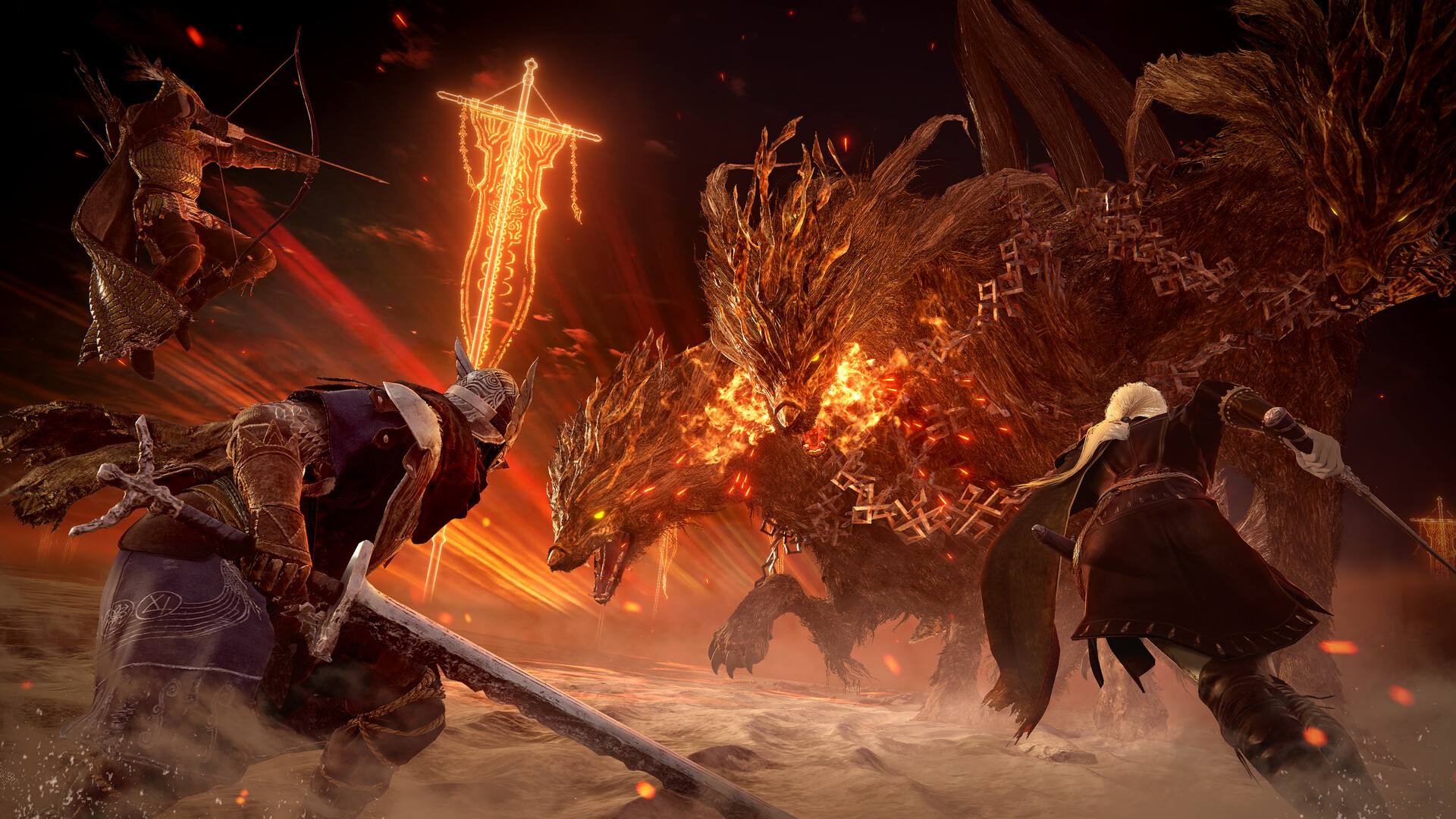
Nightlord System Overview
| Aspect | Details |
|---|---|
| When They Appear | Day 3 Night — after the Day 3 evacuation circle closes |
| How Many Nightlords | Multiple rotating Nightlords — each Expedition selects one from the pool |
| Phase Count | Minimum 2 phases; some Nightlords have 3 phases |
| HP Scaling | Scales with number of players — team fights have higher Nightlord HP totals |
| Reward for Completion | Expedition success; permanent progression unlocks for the applicable Nightfarer |
| Failure Condition | All Nightfarers simultaneously dead with no revival possible |
| Time Limit | No strict timer after the evacuation circle closes — fight until success or failure |
| Can You Retry | No — a failed Nightlord ends the Expedition; a new run must be started from Day 1 |
The Nightlord Rotation System
Unlike the Night Bosses (which are drawn from a random pool of field bosses and mini-bosses for each Night phase), the Nightlord is a curated final boss chosen from a dedicated Nightlord pool. Each Expedition will feature a specific Nightlord type — what varies between runs includes the Nightlord's elemental affinity, specific attack set, and which phase transitions it has.
The Nightlord selection appears to be seeded from other Expedition variables — players who run the same Expedition simultaneously (via co-op matching) face the same Nightlord. This allows for community knowledge sharing about which Nightlord is 'active' in a given matchmaking window, though the full rotation pattern has not been fully documented at time of writing.
Some Nightlords carry elemental weaknesses while others have blanket resistance to specific damage categories. Checking the Nightlord's visible elemental affinity before the Day 3 phase ends (through environmental cues or prior knowledge) lets your team adjust weapon and spell loadouts accordingly before the encounter begins.
Multi-Phase Mechanics and Phase Transitions
All Nightlords have a minimum of two phases separated by a health threshold — typically around 50–60% of total health. Phase 2 introduces new attack patterns, enhanced versions of Phase 1 attacks, and often a dramatic visual transformation. The transition itself is usually accompanied by an AoE slam or shockwave that deals significant damage to anyone in melee range — watch for the visual cue and create distance immediately when the Nightlord reaches the threshold.
Between phases, there is typically a brief window (3–5 seconds) where the Nightlord is stationary and vulnerable. This window is your primary opportunity to revive downed teammates — use it every time without fail. The post-transition vulnerability window often represents the highest single damage opportunity in the entire fight: burst all cooldowns, consumables, and special attacks into the Nightlord during this brief open period.
Phase 3 (in Nightlords that have it) is even more aggressive and typically reduces the Nightlord's telegraph time — attacks that previously had 1-second wind-ups may now have 0.5-second wind-ups in Phase 3. If your team has struggled with a Nightlord through Phase 2, Phase 3 requires everyone to already know the patterns rather than learning them in real-time. Prior experience with the specific Nightlord is the most valuable asset in Phase 3.
Pre-Nightlord Preparation Checklist (Day 3)
- Maximize weapon upgrade level — any weapon below +7 during Day 3 represents a missed upgrade opportunity. Check all field camps for smithing materials.
- Use all available Sacred Flask charges — restock at any grace site or church before the evacuation circle closes. Enter the Nightlord at full Flask charges.
- Rune level target: aim for rune level 50+ before the Nightlord on standard Expeditions. Below 40 is underpowered and will result in taking excessive damage.
- Identify the Nightlord's elemental weakness if known from prior runs or community resources — swap weapons or spells to exploit it.
- Identify revival assignments in co-op: who is the primary reviver (typically Guardian), who should be revived first if multiple players are down.
- Use any consumables accumulated during Day 3 that you won't save past the fight — Exalted Flesh, defensive talismans, and damage-boosting items should all be used at phase transitions.
- Position your entire team at the Nightlord's arena entrance together before the evacuation circle forces you in — don't stagger the entry alone.
Team Composition for Nightlord Fights
The optimal team composition for Nightlord encounters is: one Guardian or high-Poise melee Nightfarer to maintain aggro, one damage dealer (Wylder or Duchessa) to continuously apply pressure from the flanks, and a third flexible role that handles revival and healing. With the Guardian's Radiant Ward active during the Nightlord's most dangerous phases, the damage dealers can attack more aggressively knowing their incoming damage is reduced.
Without a dedicated tank, Nightlord aggro shifts unpredictably — the Nightlord will suddenly target your Duchessa at close range, creating a situation where your highest-damage character is also absorbing the hardest hits. Designate one player explicitly as the aggro anchor before the fight begins, and have that player run to the Nightlord immediately after any phase transition to re-establish aggro.
In the third-player slot, a second melee damage dealer is generally better than a second caster — two casters with high FP requirements may both run out simultaneously in a long Nightlord Phase 3, reducing the team to melee without either dedicated caster's primary damage. A physical backup gives consistent damage regardless of resource state.
Role Responsibilities During Nightlord Fight
| Slot | Recommended pick | Why / notes |
|---|---|---|
| Tank Role (Guardian or high-Poise melee) | Maintain aggro by attacking consistently; Radiant Ward on phase transitions | Never let aggro drop — if Nightlord shifts attention to a damage dealer, that player is in danger immediately |
| Primary DPS | Attack from flanks and rear; never cross into tank's aggro cone | Boss flanks and rear have reduced hitbox coverage — safer and often unguarded positions |
| Secondary DPS / Support | Primary revival responsibility; attack when boss is safely staggered or downed | This player should always be last to die — staying alive enables revival of primary roles |
| Phase Transition (all) | Create distance on health threshold hit; revive any downed player during vulnerability window | Phase transitions are the most predictable and safe revival window in the entire encounter |
| Phase 3 / Emergency | Use all remaining consumables; no resource conservation for future fights | The Nightlord is the last fight — expend every item, every Flask charge, every ability on cooldown |
Frequently asked questions
How do I know which Nightlord I'll face before the Expedition ends?
The specific Nightlord for your current Expedition can sometimes be inferred from environmental storytelling and visual cues in the Limveld during Day phases — certain elemental themes and creature types foreshadow the Nightlord. Community resources that track the current rotation (updated by players who have completed recent Expeditions) are the most reliable source. At launch, rotating schedules are not always published officially.
Can I leave the Nightlord arena during the fight?
No. Once the Day 3 evacuation circle closes and the Nightlord encounter begins, you cannot leave the designated arena area. Attempting to move outside the arena boundary results in increasing damage, eventually becoming lethal. The arena boundary is marked on the minimap. Position your team within the arena before the circle fully closes.
Does the Nightlord become easier on subsequent attempts?
The Nightlord's difficulty does not decrease on repeated attempts in the same session. Each new Expedition starts fresh with the same Nightlord challenge level. However, permanent progression unlocks from prior Expedition completions (Nightfarer upgrades, starting stat improvements) make future Expeditions progressively easier as your account-level permanent power increases.
What should I use my Sacred Flasks on during the Nightlord fight?
Prioritize using Sacred Flask charges on the survivable player who can most benefit from them at any given moment. The tank should use Flasks first since they absorb the most damage. Save your last 1–2 Flasks for after a phase transition — the new phase's opening attacks often hit harder than you expect. Do not save Flasks for 'later' — the Nightlord is the final encounter, use every Flask charge aggressively.
What permanent rewards do I get for defeating a Nightlord?
Defeating the Nightlord completes the Expedition successfully and grants permanent progression for the Nightfarers who participated. This typically includes unlock of additional ability upgrades, starting stat improvements for that specific Nightfarer, and potential new Relic drops available in future Expeditions. Defeating each unique Nightlord type for the first time provides higher reward tiers than repeat clears.
Can I fight the same Nightlord multiple times?
Yes. The Nightlord pool rotates, so a previously-defeated Nightlord type may reappear in future Expeditions. Repeat Nightlord clears still grant permanent progression rewards, though at reduced rates after the first clear. The familiarity with a recurring Nightlord's attack patterns makes second and third clears significantly easier than the first encounter.
Sources & verification
Continue this guide path
- ›Elden Ring Nightreign Beginner's Guide — How Expeditions & the Night Cycle WorkNew to Elden Ring: Nightreign? This beginner's guide explains the core Expedition loop, the 3-day and night cycle, how Nightfarer selection works, and the fundamentals of rune collection and power scaling within a run.
- ›Nightreign Guardian Build — Tank & Support Role GuideThe Guardian is Nightreign's dedicated tank Nightfarer — built to absorb punishment, protect teammates, and keep the team alive through the most dangerous Night Boss and Nightlord encounters. This guide covers Guardian's defensive kit, optimal shield setup, Poise management, and how to maximize your team-support value across all three days.
- ›Nightreign Wylder Build Guide — Best Weapons & Playstyle TipsThe Wylder is Nightreign's generalist Nightfarer — adaptable, weapon-flexible, and capable of carrying a team when played with positioning discipline. This guide covers Wylder's passive and active abilities, the best weapon synergies, stat priorities for each day of the Expedition, and the power spikes that define the class.
- ›Nightreign Permanent Progression Guide — What Carries Over Between RunsElden Ring Nightreign is a roguelike, but it has a robust meta-progression system that makes every Expedition rewarding regardless of success. This guide explains everything that persists between runs — Nightfarer upgrades, unlocked abilities, relic discoveries, and how to efficiently build permanent power for your preferred Nightfarer.
- ›Elden Ring Nightreign Best Class Tier List — All Nightfarers RankedWhich Nightfarer should you play in Elden Ring Nightreign? This tier list ranks all available Nightfarers for solo and 3-player co-op, explains why the meta favors certain classes, and helps you pick the best option for your playstyle and experience level.